Occasionally we become so focused on the nitty-gritty technical facets of writing and publishing we overlook the ability of the subconscious mind, the component that comprehends story at a fundamental level.
Caroline additionally hosts the wonderful Secret Library Podcast, which I’ve been on several times talking about writing and creativity.
Have you ever wished there was a tool which could tap into the unconscious portions of your brain that will help you write your publication?
If yes, I’ve got good news for you: that instrument is different, and it is the Tarot.
As a lot of men and women associate the tarot with fortune telling or personal development practices, they are frequently surprised to hear that may also be utilised to encourage the writing process. These 78 cards portray a full array of human experience, from large moments in our lives to the more mundane and everyday occasions. Rather enjoy a fantastic book, right?
Since you do not have to be a tarot reading online or an enthusiast of these cardsto benefit from using it for your writing, I will not go in the history of the tarot for the purposes of this article. Instead, let’s get right down to composing.
First, let’s talk about how to pull a tarot card card as part of your writing process
The tarot is most useful when you request a particular question, but one that does not have a yes or no response. Is a much more useful question, by way of instance, compared to”Is this scene functioning?” We’ll talk examples of questions for certain situations below.
You can combine the cards loosely in your hands, spread them on the surface of the table and then reassemble them in a deck, or just shuffle them such as regular playing cards.
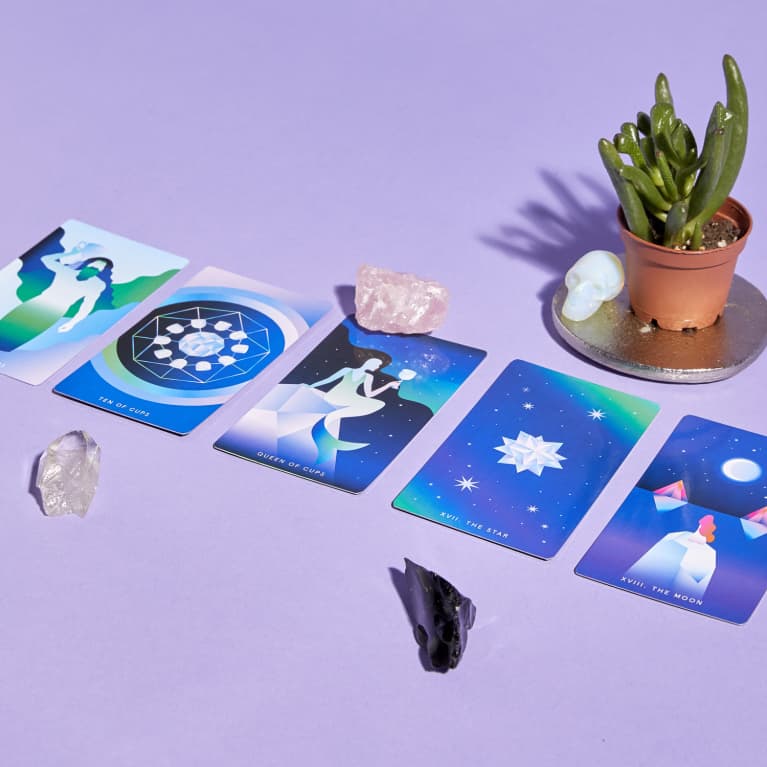
Hold your question in your mind as possible shuffle. Sometimes a card will fall out — I always look at the card when this occurs. If no card drops out, then pick any card which feels right to you and flip it over.
Do not rush to a tarot book or external validation for the meaning of the card. Instead, examine the image on the card facing you.
How does this make you feel?
What do the pictures spark in your imagination?
Are there some private associations you have with this picture?
The most important meaning of this card is the one that appears in your mind.
See if your interaction with the image answers your question. At times the events portrayed in the film is sufficient to reveal the path forward for your story. Start looking for the emotional level of the card if you had a character motivation question. If your query was about storyline, see what is going on in the card and when this can help you.
The mind abhors a vacuum and will start to assign meaning to some image it sees.
Take advantage of this trend and allow your head to fill in the openings between your query and the card in front of you. You can achieve so by thinking or take it a step farther by freewriting or journaling in reaction to this question and also the card.
When you have researched your own associations with the card, then you may look up the traditional significance, if you choose, for additional insight. But make certain that you understand what it means for you first — all that matters is if this procedure assists your writing, not whether or not you”got the card “
Now, let’s move on to specific situations where tarot can help you compose.
Listed below are 4 ways that tarot can help you in completing your book.
- The planning procedure
As you have made outlines at the past, can you remember the moments when you aren’t sure how to get your character from point A to point B, or whenever her motivation isn’t entirely clear to you? That is the moment to pull out the tarot.
Great questions for this point:
- Why is this important to this personality?
- What’s his/her/their biggest fear?
- What is my personality hoping to attain? Drafting
If you’re more of a pantser, composing by the seat of your trousers, the tarot could be your companion during the full draft. As soon as you’ve your idea for the story, you can write ahead until you hit a wall, and then pull on a card to proceed. It’s a bit like a choose-your-own-adventure procedure, and can be great fun.
Who will my character meet within another scene?
What barrier is all about to appear?
Little does he/she/know BUT…. (Freewrite on what this shows )
- Character growth
Instead of performing a tarot spread for myself or a friend, I did one for a character in a book that the friend had been working on and’d gotten stuck with.
There are lots of complicated spreads floating about, but something as simple as”past, present, and future” of any character can open up a lot of discovery. This is also amazing to do for your antagonist, as their psychology is every bit as important (and endlessly intriguing, I find!)
Specific cards to pull for personality:
Overview of the youth
Relationships: pull on a card to symbolize their mother, dad, grandma, etc..
Their best wish/what they’re seeking in the narrative
The Achilles heels to your primary personality OR your own antagonist. When hit writer’s block
This is maybe the best gift tarot must provide you as a writer. When it feels like there are no more ideas, no longer scenes, and no obvious way forward, the tarot offers 78 pushes to maneuver you through.
Often we dry up since we are not seeing the entire complexity and chance from the story. The tarot is absolute gold for mining meaning and getting your pen moving across the page again.
What is the most fascinating thing about this story?
Whose point of view should I explore?
What’s lurking beneath the surface?
If you’re new to tarot, I am SO excited for you. There’s a world of beauty available right now and a lot of amazing decks. It may be a bit overwhelming, so here Are a Few Tips That Will Help You browse the crazy world of tarot:
Choose a deck with art that speaks to YOU. It doesn’t matter if it’s on a popular or must-have record (such as the one below!) In case the artwork leaves you cold.
Should you learn to enjoy tarot, you might want a few decks eventually — distinct art has another tone. For instance, I use another deck for my heroine than for my antagonist.
If you’re able to locate a new era bookshop where you’re able to handle the cards and see them up close- buy there. Cards feel different on the web than they do on your hand.
The Wild Unknown: beautiful monster vision, black and white drawings with pops of colour
Spolia Tarot: Collage deck published on gorgeous card stock. If you would like to get deep into the shadow, this is your deck
The Rider-Waite-Smith: the classic standard. Many modern decks utilize interpretations of this vision. If you are interested in learning the cards, then this system is fantastic to know
Aeclectic.net is a fantastic source to find the pictures of hundreds of decks- have a surf and discover your own favorite! One of my favorites.
Story Arcana is a self-guided email class on writing with tarot which I created and also a fantastic following step if you want to find out more.
Perhaps you have used the tarot in combination with writing your novels? Please leave your thoughts below and join the conversation.